Home › Asphalt Pathways, Sidewalks, and Trails
Precision Asphalt Detroit installs asphalt pathway paving in Detroit, MI for parks, schools, business campuses, and neighborhoods. We create smooth, accessible walking and biking paths with proper grades and drainage. Our multi use trails and sidewalks provide safe connections between buildings, parking, and recreation areas. Contact us to design and build your next asphalt path project.
Precision Asphalt Detroit provides professional asphalt pathway paving throughout Detroit, MI, Michigan and the surrounding area. Our licensed, insured crew delivers safe, clean, on-time work with a free estimate before anything begins. Call (313) 889-7046 or request your free quote.
Durable Asphalt Pathways, Sidewalks, and Trails in Detroit
Asphalt pathways, sidewalks, and trails take a beating in Detroit. Freeze-thaw cycles, road salt, tree roots, and heavy foot and bike traffic all add up. Precision Asphalt Detroit focuses on building paved routes that hold up to Southeast Michigan conditions, not just ones that look good on day one.
We install asphalt walking paths in neighborhoods, city parks, school campuses, apartment complexes, hospital grounds, and commercial sites across the Detroit area. Whether you need a short connector path from a parking lot to a building entrance or a multi-mile recreational trail, we design the pavement structure to match the actual use and the soil conditions on your property.
Instead of pushing a single solution, we look at details like planned traffic (pedestrian only, bikes, light service carts), existing drainage patterns, nearby trees, and how plows or maintenance vehicles may interact with the surface. Those specifics determine the right base depth, asphalt mix, and edging so your pathway or sidewalk lasts instead of raveling or heaving after a couple of winters.
How We Build Long-Lasting Asphalt Pathways and Sidewalks
Quality asphalt pathway paving starts below the blacktop. Precision Asphalt Detroit begins with layout and grade checks to make sure the finished path sheds water correctly and meets ADA slope guidelines where required. On many Detroit sites, especially older neighborhoods and industrial properties, we find a mix of fill material. We excavate to stable subgrade, typically 6 to 12 inches below finished grade for pedestrian routes, deeper if service vehicles will use the trail.
We compact the subgrade, then install a crushed stone base, usually 21AA limestone or similar, in one or two lifts. Each lift is mechanically compacted with a roller or plate compactor to reach proper density. Skipping this step is what causes pathways to develop soft spots, dips, and cracks within a few seasons.
For the asphalt layer, pedestrian paths often use a 2 to 3 inch compacted thickness. Higher traffic or maintenance access routes may need 3 to 4 inches. We typically use a fine-graded surface mix for a smoother walking and cycling surface, and can specify polymer-modified or high-performance mixes in high wear areas like around school drop-off zones or hospital entries.
Edges are a frequent failure point in Detroit pathways. We pay close attention to edge compaction and, where appropriate, add concrete, brick, or steel edging or extra shoulder stone. On projects that will see snow plowing, we adjust edge detail and jointing so plow blades are less likely to catch and tear the asphalt.
Design Options, Accessibility, and Surface Choices
Pathways, sidewalks, and trails are part of how people move through your property, so the layout and surface finish matter. Precision Asphalt Detroit works with you or your landscape designer to set widths, radiuses, and intersecting routes that feel natural without causing drainage problems in Detroit’s mixed soils.
Standard walking paths are often 5 to 6 feet wide, while mixed-use recreational trails may be 8 to 12 feet wide to safely accommodate bikes and pedestrians. We consider turning radiuses for maintenance equipment and emergency access, especially in parks and apartment communities.
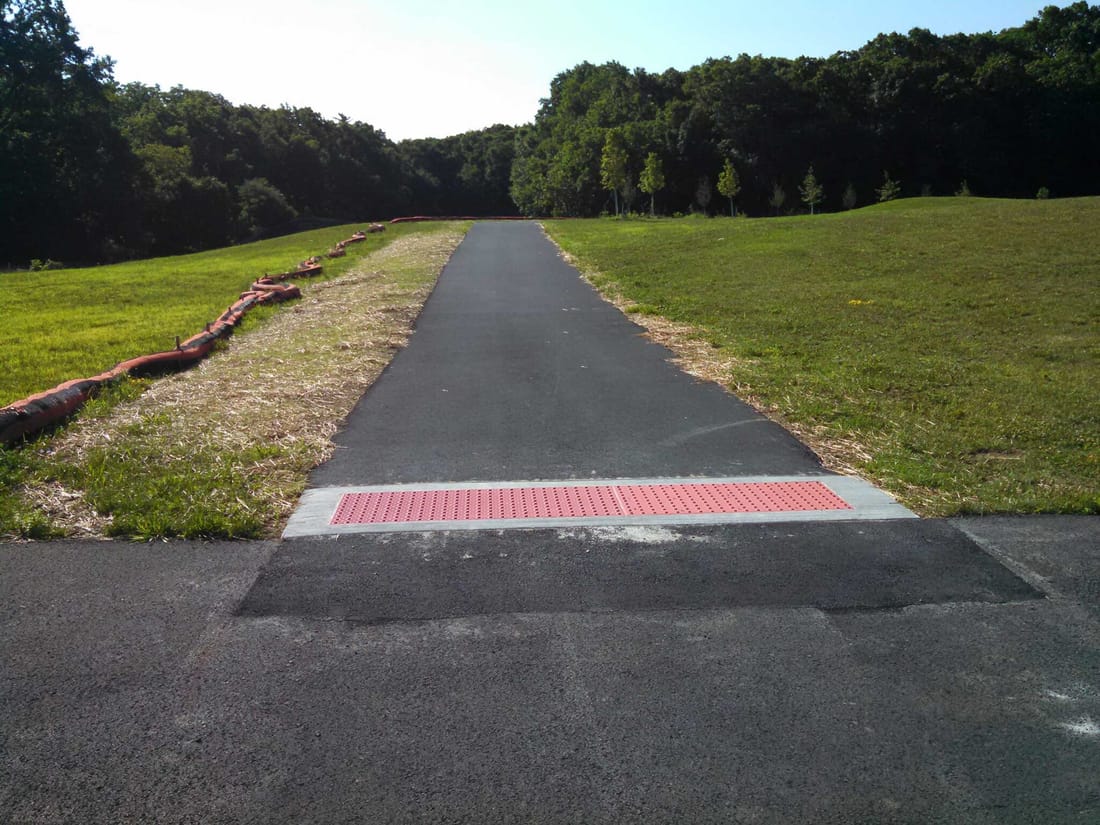
For accessibility, we account for ADA standards on cross slopes and running slopes whenever we are tying into public sidewalks or serving public buildings. Where grade changes are unavoidable, we design transition zones and landings, and integrate concrete ramps or detectable warning panels at street crossings when required by local code.
Surface texture can be adjusted through the chosen asphalt mix and rolling pattern. A finer mix with tight compaction gives a smoother surface that works well for wheelchairs, strollers, and bicycles. In shaded or consistently damp areas, we may recommend slightly more texture for traction, combined with a slope plan that moves water off the surface quickly to reduce icing.
Color and striping are also options. While standard black asphalt is most common, we can apply pavement markings for lane separation on multi-use trails, shared-lane symbols, or high-visibility crosswalks where a pathway meets a parking lot. For campus and corporate settings, we can coordinate striping and layout with site wayfinding plans.
Local Conditions That Affect Asphalt Pathway Paving in Detroit
Detroit’s climate and soils shape how we build and repair asphalt pathways. The freeze-thaw cycle and frequent use of salt create more stress on shallow pavements than in many other regions. Precision Asphalt Detroit designs pathways with proper base depth and drainage so water does not sit under the surface and expand when it freezes.
Clay-heavy soils found in much of Metro Detroit expand and contract significantly. On sites with poor native soils, we may undercut and replace unsuitable material, add more aggregate base, or use geotextile fabric or geogrid to stabilize the pathway. This is especially important for longer trails in low-lying park areas along the Rouge or near the riverfront where groundwater is higher.
Tree roots are another recurring issue in older Detroit neighborhoods and parks. Instead of simply paving over existing root zones and hoping for the best, we look at root paths, adjust alignments where feasible, and may install root barriers or thicker base sections to reduce heaving. When we are tying new asphalt paths into older concrete sidewalks, we consider the elevation differences and joint details so frost heave at the interface does not create trip hazards.
Snow management is a real-life factor, not an afterthought. We talk with property owners about how they clear pathways and sidewalks. If plows or small tractors will be used, we may suggest slight layout changes, reinforced edges, and turning pads where machines regularly pivot, all to prevent edge unraveling and gouging.
Costs, Lifespan, and Common Issues With Asphalt Pathways
Pathway and sidewalk pricing in Detroit varies based on several specific factors: total square footage, required excavation depth, base thickness, asphalt thickness, site access, and any concrete work at tie-ins or ramps. A simple straight sidewalk replacement in an open yard costs less per square foot than a curving trail through trees with limited machine access.
Precision Asphalt Detroit provides itemized estimates that break out excavation, base installation, asphalt paving, and any extras such as striping, edging, or drainage structures. That transparency helps property managers, HOAs, and municipalities compare options, for example choosing between a thicker base now versus more frequent surface maintenance later.
With correct design and regular care, an asphalt pathway in Metro Detroit can last 15 to 25 years before needing complete reconstruction. During that time, typical maintenance includes crack sealing, localized patching, and occasional surface overlays. We usually recommend assessing high traffic or high visibility paths annually or every other year to catch small problems before they turn into trip hazards.
Common issues we address include longitudinal cracks along edges, birdbaths (small depressions that hold water), raveling surfaces, and root heave. On routes that must remain open, like hospital campus walks or apartment sidewalks, we schedule work in phases and use fast-curing materials so downtime is limited. We also coordinate with city inspectors when work intersects public rights of way or requires sidewalk permits.
What to Expect When You Work With Precision Asphalt Detroit
Before we ever bring equipment on site, we walk your property, take measurements, and talk through how the pathway, sidewalk, or trail will be used day to day. Precision Asphalt Detroit then provides a written proposal that spells out pavement structure, thicknesses, schedule, and any assumed allowances, for example for unsuitable soil removal.
On installation day, you can expect clear traffic control and site protection so residents, tenants, customers, or students know where they can and cannot walk or park. We handle haul-off of old concrete or asphalt, excavate and grade the path, install and compact the base, then pave in one or more lifts depending on thickness. Our crews check slopes with levels and string lines so that water drains correctly and surface transitions are smooth.
For many small to mid-sized pathway projects, paving and opening to foot traffic can often be completed within one or two days, weather permitting. We typically recommend keeping heavy carts or vehicles off new asphalt for 48 to 72 hours. Before wrapping up, we walk the finished work with you, address any small touch-ups, and review basic maintenance guidelines such as when to seal cracks and how to avoid damage from parked equipment or aggressive plowing.
If you are planning a new pathway system or need to replace failing sidewalks or trails anywhere in the Detroit, MI area, Precision Asphalt Detroit can evaluate options, including staged replacements that work within annual budgets while still improving safety and appearance each season.