Home › Commercial Asphalt Resurfacing & Overlays
Precision Asphalt Detroit offers commercial asphalt resurfacing in Detroit, MI for parking lots, drives, and private roads. We repair structural failures, mill high spots, and install a new asphalt overlay to create a smooth driving surface. Mill and overlay projects can add many years of use to a sound base. Contact our team to review whether resurfacing is the right strategy for your property.
Precision Asphalt Detroit provides professional commercial asphalt resurfacing throughout Detroit, MI, Michigan and the surrounding area. Our licensed, insured crew delivers safe, clean, on-time work with a free estimate before anything begins. Call (313) 889-7046 or request your free quote.
Commercial Asphalt Resurfacing & Overlays for Detroit Businesses
Commercial asphalt resurfacing is often the most cost-effective way for Detroit property owners to restore worn parking lots and drive lanes without paying for full-depth reconstruction. Precision Asphalt Detroit focuses on resurfacing and overlays that match how your pavement is actually used, from high-traffic retail centers along Woodward and Gratiot to industrial yards closer to the riverfront.
Instead of a generic, one-size-fits-all fix, we evaluate how heavy your traffic is, how often trucks turn, where standing water collects, and how the freeze-thaw cycles have affected the base. This allows us to recommend an overlay thickness, mix type, and drainage improvements that fit the real-world conditions at your site. For many Detroit businesses, this means extending pavement life 8 to 15 years at a fraction of the cost of total replacement.
Our goal is to give you smooth, safe pavement with minimal disruption to your customers and tenants. We schedule work around your peak hours, phase large projects so parts of the lot remain open, and coordinate with property managers to keep deliveries and access flowing while resurfacing is underway.
When Resurfacing Is the Right Choice (and When It Is Not)
A good overlay starts with an honest evaluation. Precision Asphalt Detroit will not recommend commercial asphalt resurfacing if we see structural failure that a new surface cannot fix. In Detroit, we often find three main conditions that guide the decision.
First, resurfacing is usually a good option if your lot has surface cracking, shallow potholes, minor ruts, and faded striping, but the pavement still feels solid under heavy vehicles. We check this by probing the base at core locations or test pits, looking for firm, dry aggregate instead of pumping mud.
Second, resurfacing may still work when isolated areas have deeper failure, as long as those areas can be removed and patched with full-depth repairs first. This is common near dumpster pads, loading docks, and drive-thru lanes, where turning trucks concentrate stress.
Third, a full reconstruction is often better if the base is saturated, if you see widespread alligator cracking that flexes when trucks pass, or if manholes and catch basins have sunk significantly. In those cases, an overlay would only hide the problem for a short time. We outline these findings clearly so you understand exactly what your pavement can and cannot support before you invest.
Step-by-Step Process for Commercial Asphalt Resurfacing & Overlays
Precision Asphalt Detroit follows a detailed, repeatable process so your overlay bonds properly and drains well.
1. Site inspection and measurements: We walk the property, document traffic patterns, note drainage problems, and measure slopes. We also count and locate utility castings, drains, and transitions to sidewalks and docks.
2. Milling and leveling: If the existing pavement is too high at curbs or doors, we use a milling machine to grind down the surface to a controlled depth. In Detroit, we often perform edge milling along curb lines and at entrances so the new overlay does not create trip lips or drainage dams.
3. Base and full-depth repairs: Before placing any new asphalt, we cut out and excavate failed spots. These areas are replaced with new base stone if needed and compacted hot mix asphalt. This step is what separates long-lasting overlays from quick cosmetic fixes.
4. Cleaning and tack coat: The surface is swept with mechanical brooms and blowers until it is free of dust and debris. We then apply a tack coat, a thin layer of asphalt emulsion that acts like glue between the old pavement and the new overlay so the layers act as one.
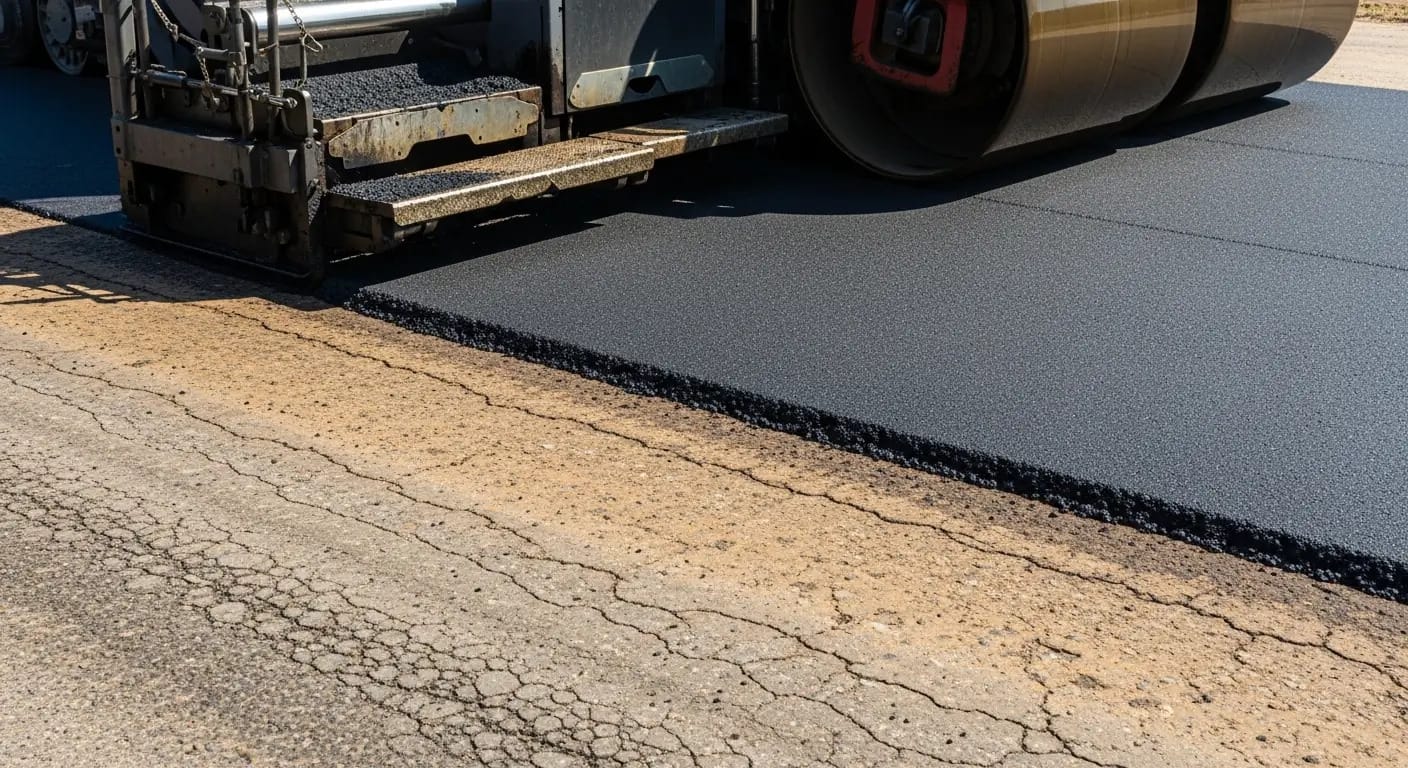
5. Placing the overlay: Using commercial pavers, we install a new asphalt layer, typically 1.5 to 3 inches thick depending on traffic and structural needs. Our crews monitor mat temperature, joint quality, and paver speed to avoid segregation and ensure a uniform surface.
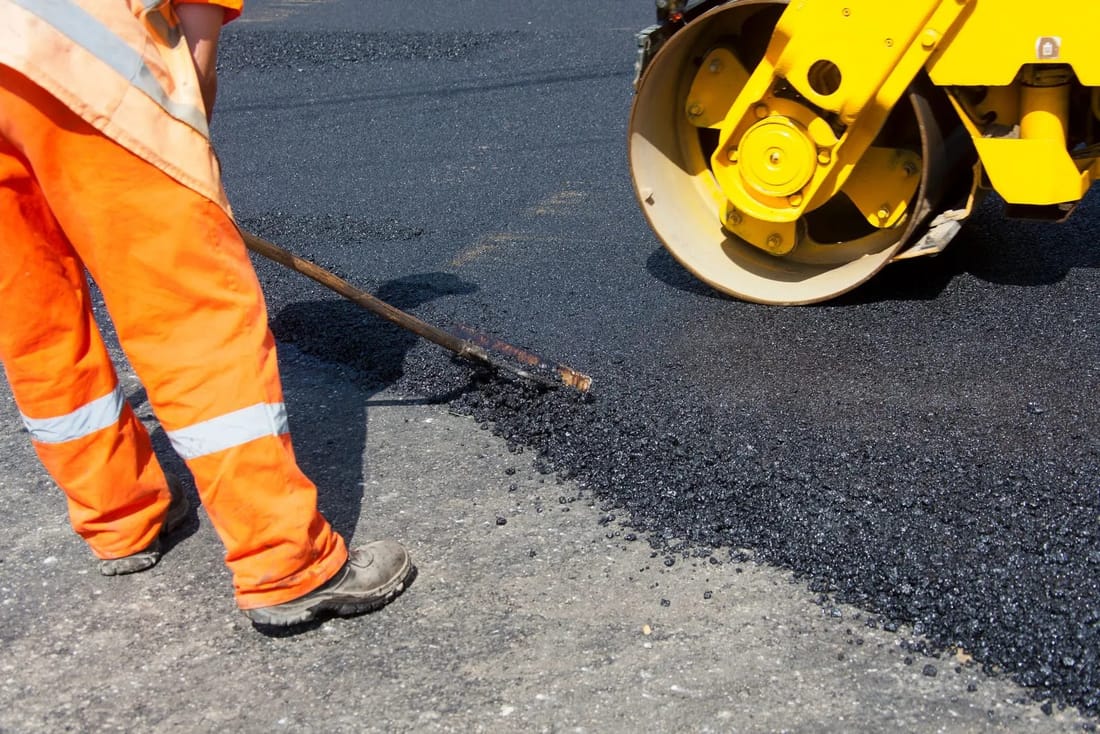
6. Compaction and finishing: Rollers compact the new layer while it is still at the right temperature window. We pay special attention to joints between paving passes, tie-ins at streets and alleys, and thickness around catch basins so water sheds properly.
7. Striping and reopening: Once the surface cools, we re-stripe stalls, fire lanes, ADA spaces, and directional arrows according to city and ADA standards. We then set a safe timeline for reopening based on weather and mix temperature so you avoid early rutting or scuffing.
Material Options and Design Choices for Busy Detroit Properties
There is more than one way to resurface a commercial lot, and the right choice depends on how your property functions day-to-day. Precision Asphalt Detroit explains these options in plain language so you can decide what matters most for your budget and users.
For general retail and office parking lots, we often recommend a standard MDOT-style hot mix asphalt overlay with a nominal 1.5 to 2 inch thickness. This balances cost and durability for sedans and light trucks. For heavy truck traffic such as warehouses or auto suppliers, we usually increase overlay thickness and may use a heavier-duty surface mix with more stone and less sand to resist rutting and shoving.
If your property has long-standing drainage issues, we might adjust slopes with a leveling course before the final overlay or deepen swales around islands. In some cases, we recommend milling high spots around catch basins and raising or lowering the casting elevations so water flows into inlets instead of across sidewalks.
Detroit winters are hard on asphalt, so we focus on minimizing water infiltration. That can include tight crack control before overlay, careful compaction around structures, and sometimes supplemental underdrains where repeated freeze-thaw cycles have softened the subgrade. For properties that value appearance, we coordinate with sealcoating schedules on adjacent areas so the entire site looks uniform instead of patchwork.
What Drives the Cost of Commercial Asphalt Resurfacing
Many property managers call us wanting to understand why overlay pricing can vary from lot to lot. Precision Asphalt Detroit is transparent about what actually drives cost so you can compare proposals fairly and avoid surprises.
Key factors include total square footage, required overlay thickness, and how much milling or full-depth patching is necessary before resurfacing. A small Detroit strip mall lot with minimal repair needs and a 1.5 inch overlay will cost far less per square foot than a distribution center that needs 3 inches of new asphalt and extensive base work.
Access and phasing also impact cost. Lots that require night work, multi-phase staging to keep certain entrances open, or extensive traffic control will carry higher labor and equipment costs. Tight urban sites where trucks and pavers must maneuver around compact conditions can be more time-consuming than wide-open suburban lots.
Material prices are tied to oil costs and plant distance. Because we work locally, we know which asphalt plants offer the best mix consistency and logistical fit for Detroit projects. We also account for the number of mobilizations required if your project is split into multiple phases to keep tenants operating.
Our proposals spell out line items for milling, patching, overlay thickness, and striping so you can see where your money is being spent instead of getting a single lump-sum number with no explanation.
Common Problems We Solve on Detroit Commercial Lots
Commercial asphalt resurfacing is not just about a new black surface; it is about fixing the recurring issues that frustrate you and your customers. Over years of working in Detroit, Precision Asphalt Detroit has seen patterns in what local property owners struggle with.
One frequent issue is ponding water near entrances or in the center of drive lanes. Overlays can be designed to add slope by using variable milling depths and leveling courses. Before we pave, we often flood-test questionable areas or check slopes with laser levels so we know where adjustments are needed.
Another problem is rapid crack reflection, where old cracks show through a new surface in a year or two. To reduce this, we thoroughly clean and seal larger cracks before overlay, remove and replace structurally failed sections instead of just covering them, and use proper tack coat coverage so the new layer is well bonded.
Heavy truck paths around warehouse corners, gas stations, and loading docks often develop ruts and shoving. In those zones, we may thicken the overlay, upgrade the mix design, or recommend a reinforced concrete pad for the highest stress areas. This targeted approach can stretch your budget by only upgrading where it is truly needed.
For mixed-use developments and medical facilities, we also prioritize ADA compliance and pedestrian safety. That can include fine grading around curb ramps, clear crosswalk markings, and ensuring that raised overlays do not create non-compliant slopes at accessible routes.
Working With Precision Asphalt Detroit on Your Resurfacing Project
When you schedule a commercial asphalt resurfacing evaluation with Precision Asphalt Detroit, we start with a walkthrough of your site, not just a quick look from the truck. We ask how your lot is used through the week, which tenants operate late hours, where snow typically piles up, and which areas give you the most complaints. This context guides the resurfacing plan.
We then prepare a written scope that details repair quantities, overlay thickness, traffic control, and an estimated schedule. For multi-building or multi-lot properties, we can prioritize high-liability areas first, then phase the rest around your capital plan.
Detroit weather and construction seasons can change quickly, so we keep communication open about timing. If a cold front or heavy rain is coming, we will reschedule rather than rush, because overlay quality depends on temperature and dry conditions.
Throughout construction, a project lead is on site to coordinate with your management team, adjust signage, and handle tenant questions. At the end, we perform a joint walk-through to confirm drainage, workmanship details, and striping layout. You receive any necessary documentation for your records, including warranty terms and recommended maintenance steps such as crack sealing and sealcoating timelines so you get the full life out of your new overlay.