Home › Commercial Gravel-to-Asphalt Conversions
Precision Asphalt Detroit performs commercial gravel to asphalt conversions in Detroit, MI for parking lots, drives, and access roads. We evaluate existing gravel depth, improve drainage, and construct a strong base before paving with asphalt. Upgrading to asphalt reduces dust, mud, and grading costs while improving appearance and accessibility. Request a site visit to plan your gravel lot conversion.
Precision Asphalt Detroit provides professional commercial gravel to asphalt throughout Detroit, MI, Michigan and the surrounding area. Our licensed, insured crew delivers safe, clean, on-time work with a free estimate before anything begins. Call (313) 889-7046 or request your free quote.
Turn Your Gravel Lot Into a Reliable Asphalt Surface
If your commercial property in Detroit still relies on a gravel lot, you already know the headaches: ruts after every rain, dust on parked vehicles, mud tracked into your building, and constant regrading. At Precision Asphalt Detroit, our commercial gravel to asphalt conversions focus on solving those issues in a way that fits Southeast Michigan weather and your specific business operations.
We start by walking the site with you and looking at how the space is actually used. Heavy semi traffic, delivery trucks, employee parking, customer parking, and dumpster pads all load the ground differently. During this visit we check existing gravel depth, spot soft or pumping areas, note drainage paths, and locate utilities. This up-front evaluation lets us tell you honestly whether we can build on your existing base or if certain sections need a full-depth rebuild.
Because Detroit sees freeze-thaw cycles, lake-effect weather, and occasional heavy rains, we design your new asphalt surface to move water away fast and stay structurally sound in winter. That usually means building or improving a proper aggregate base, dialing in the right slope, and using asphalt mixes that handle Michigan winters without crumbling around the edges or at joints.
How Commercial Gravel to Asphalt Conversions Actually Work
A typical conversion project with Precision Asphalt Detroit follows a clear, step-by-step process so you always know what is happening on your property.
1) Layout and grade checks. We start by surveying existing grades. If your gravel lot has low spots that collect water, we redesign the profile so water flows to catch basins, swales, or the street edge where allowed. In some older Detroit lots we find random high spots or humps from years of patch grading, which we mill or cut down during preparation.
2) Subgrade proof-rolling. We bring a loaded truck or roller onto the site and slowly drive or roll across the gravel. If we see deflection, pumping, or wheel ruts forming, that tells us the subgrade is weak. Soft pockets are excavated, then rebuilt with compacted aggregate so you do not end up with sinkholes under the new asphalt.
3) Base repair or replacement. On some commercial sites the existing gravel base is solid and just needs reshaping and compaction. On others, especially where clay soils are common around Detroit, we add 4 to 8 inches of crushed concrete or limestone, compacted in thin lifts. For heavy truck lanes we may include a thicker base section under those specific wheel paths instead of overbuilding the entire lot.
4) Fine grading and compaction. Once the base is the right thickness, we fine-grade with a motor grader or skid steer and compact with a vibratory roller to lock everything in. At this stage we confirm slopes with laser or level checks to be sure water will not pond on your finished asphalt.
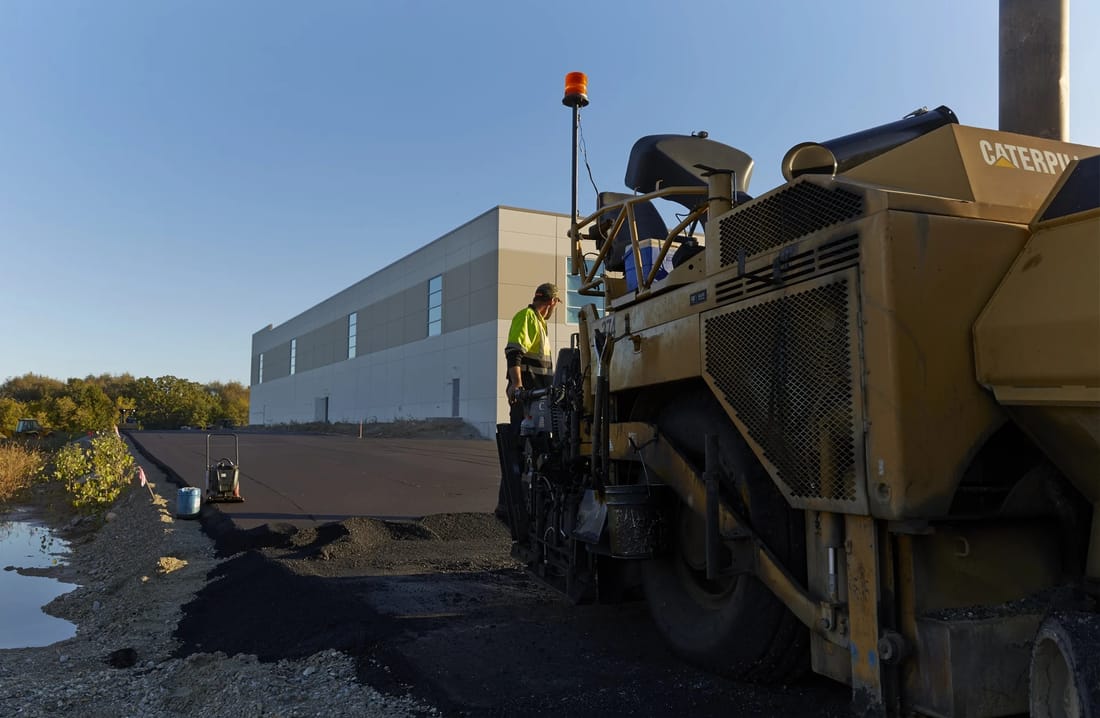
5) Asphalt paving. We typically install a 2-layer asphalt system for commercial gravel to asphalt conversions: a thicker base course for strength, then a smoother surface course for appearance and ride quality. In lighter-duty lots we may use a single thicker lift if that fits budget and use. Joints are staggered and edges are compacted firmly to prevent early cracking.
6) Detailing and cleanup. We sawcut clean tie-ins to existing asphalt or concrete, stripe parking stalls and accessible spaces, and reinstall signs or wheel stops as needed. Before we leave, we walk the site with you and flag any areas that require extra curing time before heavy traffic uses them.
Design Options That Fit Your Detroit Commercial Property
Not every commercial gravel to asphalt project needs the same design. Precision Asphalt Detroit works through options with you so you get what you need without paying for features that do not matter for your operation.
Pavement thickness and mix: For light-duty employee and customer parking, we may recommend 2.5 to 3 inches of asphalt over a sound base. For loading docks, forklift routes, or truck staging areas, that can increase to 4 to 6 inches with a stronger base. We choose MDOT-style or commercial mixes that handle studded winter tires, plow blades, and freeze-thaw movement common in Detroit.
Drainage strategies: If your current gravel lot turns into a lake every spring, we focus on drainage upgrades as part of the conversion. That can involve adjusting slopes, adding catch basins, installing underdrain in known wet pockets, or building small swales along property lines. Good drainage is often the difference between an asphalt lot that lasts 8 years and one that lasts 20.
Traffic flow and layout: A gravel lot tends to have “informal” parking and traffic paths. When we convert to asphalt, we help you formalize that layout. That may include adding one-way traffic aisles, designated truck turns, and clear pedestrian routes from parking to entrances. In tight Detroit city lots, sometimes small layout changes, such as angled parking or shifting a driveway, can add spaces without expanding the paved area.
Surface treatments and add-ons: After the initial paving, you can choose options like heavy-duty dumpster pads, concrete aprons at loading docks, thicker asphalt under fuel delivery areas, or light-duty concrete around building entrances to handle snow melt and salt. We also offer sealcoating and crack sealing plans so your investment stays protected long term.
What Affects Cost and Schedule in Detroit, MI
Most property managers ask the same question early on: what will this commercial gravel to asphalt conversion cost, and how long will my lot be out of service. Precision Asphalt Detroit is upfront about the factors that really move the needle.
Primary cost drivers include: thickness of base and asphalt, how much subgrade correction is needed, drainage improvements, and site access. A lot that has been compacted by years of truck traffic and drains fairly well will cost less to convert than a soft, rutted lot that sits over saturated clay and has no pitch. If we can reuse most of your existing gravel as base, that saves on material costs.
Schedule is strongly tied to Michigan weather. Asphalt plants typically operate from spring through late fall. We avoid paving when the ground is frozen or temperatures are too low, since that shortens pavement life. In Detroit, the busiest period is often May through October. If you have a tight deadline, such as a new tenant move-in date or a seasonal rush, we will talk through staging options so your operations are not shut down.
On many commercial sites we can phase the work, keeping part of the lot open while we build the new surface in sections. For example, we might complete the employee parking side first, then shift vehicles and tackle the customer side. We also coordinate with your snowplow contractor if we are paving later in the season, so they know where joints and new edges are located and do not damage fresh asphalt.
We provide itemized estimates that separate base work, asphalt paving, drainage changes, and striping so you can see exactly where each dollar goes. If you need to align the project with a budget cycle, we can prioritize the most critical structural improvements now and plan cosmetic upgrades in a later phase.
Common Problems We Solve During Gravel-to-Asphalt Conversions
Converting from gravel to asphalt can uncover hidden problems. The value of working with Precision Asphalt Detroit is that we have seen most of them across the Detroit metro area and have practical ways to deal with them.
Soft or pumping areas: These are spots where your truck tires sink or water squeezes up when you drive over them. We typically undercut these zones, replace the poor soil with compacted aggregate, and, if needed, add underdrain to keep the area dry. Skipping this step almost guarantees early cracking and potholes.
Poor drainage at neighboring properties: In some older Detroit commercial corridors, your lot might be taking on runoff from adjacent sites. During planning we look at where water is actually coming from, then adjust grades, add berms, or coordinate with neighboring owners so you are not stuck with someone else’s water problem.
Tie-ins to existing structures: When we bring asphalt up to loading docks, existing concrete pads, or building entrances, we pay close attention to elevations and slopes. The goal is a smooth transition without trip hazards or low spots where ice can form in winter. Where needed, we sawcut and adjust existing concrete so the whole system works together.
Dust and mud control during construction: Going from gravel to asphalt means a short, messy period before everything gets better. We use water trucks and staging to control dust, set up clear temporary parking or access paths, and schedule the dirtiest work outside your peak business hours whenever possible.
If you are considering a commercial gravel to asphalt conversion anywhere in Detroit or the surrounding suburbs, we are happy to walk the lot with you, discuss options in plain language, and build a plan that fits both your site and your budget.